Columbus OVI/DUI Attorney Blog
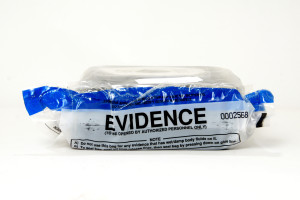 Although Ohio courtrooms may not seem as dramatic and intriguing as those on C.S.I., crime laboratory tests are regularly a part of Ohio criminal cases. In Ohio DUI / OVI cases, and in drug-related cases, crime lab technicians use scientific tests to identify drugs. The lab techs write reports about the analyses and sometimes testify at trial about the tests. A recent case in an Ohio appellate court discusses the detailed procedure for using crime lab reports in Ohio DUI / OVI and criminal trials.
Using Crime Lab Reports In Ohio DUI / OVI Cases





 Fourth amendment law does not lend itself to mathematical formulas. Rather than using equations to decide Constitutional issues, courts look at the totality of the circumstances and make decisions on a case-by-case basis. This is particularly true when it comes to the issue of whether an officer had probable cause to justify an arrest. However, one theorem illustrated by a recent Ohio OVI case is this: clues on Field Sobriety Tests (FSTs) does not equal Probable Cause (PC).