 Columbus OVI/DUI Attorney Blog
 Destruction of evidence by the government can violate a defendant’s right to due process of law. Due process violations often lead to cases being dismissed. Using dismissal as a remedy is based on the principle that denying a defendant access to evidence can make a trial unfair. This is particularly true when the evidence is ‘exculpatory’: it tends to disprove guilt or is otherwise favorable to the defendant. In DUI cases (called “OVI” cases in Ohio), the evidence often includes video from a police cruiser, a body camera, or a police station. When such a video is destroyed by the government, does the case get dismissed? Like so many questions in the legal world, the answer is:
it depends.
What Happens When The Government Destroys Evidence In DUI/OVI Cases?


 In an Ohio appellate case decided this month, the prosecutor assumed defense counsel’s motion was insufficient, and it did not end well for the prosecutor. Defense lawyers often file motions to suppress evidence in Ohio OVI cases. Occasionally, a prosecutor will claim the motion is not particular enough: it’s a ‘shotgun’ motion attacking all the evidence, or it’s a ‘boilerplate’ motion not sufficiently tailored to the defendant’s specific case. The recent case illustrates a prosecutor making that claim should still be prepared to meet their burden of proof.
 DORA may be coming to a city near you. Not Dora the Explorer with her singing map and backpack. DORA the law which allows cities to have

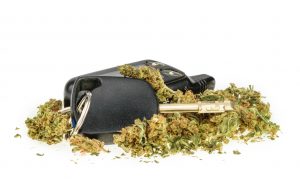 Ohio and Pennsylvania are two states which still prosecute drivers for DUI / OVI marijuana, even if the marijuana metabolites in the driver’s system are not affecting the person’s ability to drive. The Philadelphia District Attorney’s office
  The United States Supreme Court recently heard oral arguments in the case of Mitchell v. Wisconsin. As
  Brynn Campbell was involved in a head on-crash which killed the 83-year-old woman driving the other car. Campbell was taken to the hospital, and hospital staff performed a urine test. Although Campbell showed no obvious signs of impairment, a police officer went to the hospital and asked the nurse for the urine test results. The results showed Campbell’s alcohol level was well over the limit, according to the
 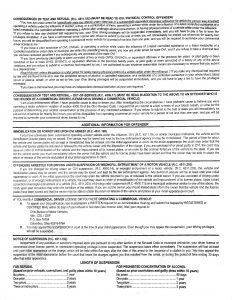 Anyone who has been charged with an OVI / DUI in Ohio has had the pleasure of listening to an officer read several paragraphs from the back of a form provided by the Ohio BMV. This often droll recitation is required by Ohio’s implied consent law, which says that anyone who operates a vehicle in the state implicitly consents to takes a blood/breath/urine test for drugs and/or alcohol if arrested for OVI. An implied consent law similar to Ohio’s was recently found to be unconstitutional by the Georgia Supreme Court.