Columbus OVI/DUI Attorney Blog



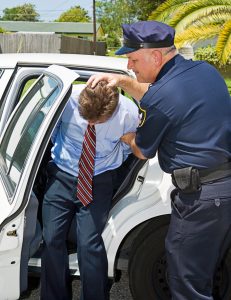
When an officer arrests a driver for DUI (called ‘OVI’ in Ohio), the officer typically requests that the driver consent to a blood, breath, or urine test. However, a statute in the Ohio Revised Code (section 4511.191) says a driver arrested for OVI implicitly consents to those tests. Can a driver arrested for OVI revoke that consent? This question has not been directly addressed in Ohio but was recently answered by the Supreme Court of Colorado.
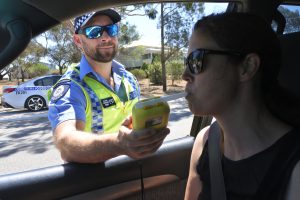 The Ontario Provincial Police (OPP) recently

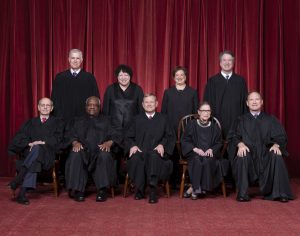 The United States Supreme Court recently heard oral arguments in the case of Mitchell v. Wisconsin. As
 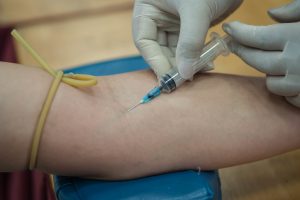 Brynn Campbell was involved in a head on-crash which killed the 83-year-old woman driving the other car. Campbell was taken to the hospital, and hospital staff performed a urine test. Although Campbell showed no obvious signs of impairment, a police officer went to the hospital and asked the nurse for the urine test results. The results showed Campbell’s alcohol level was well over the limit, according to the
  Just as Hollywood has produced some good movies in trilogies, the United States Supreme Court has produced some good case law in trilogies. The Court addressed the right to confront crime lab analysts with the trinity of Bullcoming, Melendez-Diaz and Williams. On the issue of the need for a warrant to draw blood from a DUI suspect, two-thirds of the triad have been completed: McNeely and Birchfield. The triumvirate is about to be consummated with Mitchell v. Wisconsin.
 Fourth amendment law does not lend itself to mathematical formulas. Rather than using equations to decide Constitutional issues, courts look at the totality of the circumstances and make decisions on a case-by-case basis. This is particularly true when it comes to the issue of whether an officer had probable cause to justify an arrest. However, one theorem illustrated by a recent Ohio OVI case is this: clues on Field Sobriety Tests (FSTs) does not equal Probable Cause (PC).