Columbus OVI/DUI Attorney Blog
 Destruction of evidence by the government can violate a defendant’s right to due process of law. Due process violations often lead to cases being dismissed. Using dismissal as a remedy is based on the principle that denying a defendant access to evidence can make a trial unfair. This is particularly true when the evidence is ‘exculpatory’: it tends to disprove guilt or is otherwise favorable to the defendant. In DUI cases (called “OVI” cases in Ohio), the evidence often includes video from a police cruiser, a body camera, or a police station. When such a video is destroyed by the government, does the case get dismissed? Like so many questions in the legal world, the answer is:
it depends.
What Happens When The Government Destroys Evidence In DUI/OVI Cases?



 The United States Supreme Court recently heard oral arguments in the case of Mitchell v. Wisconsin. As
 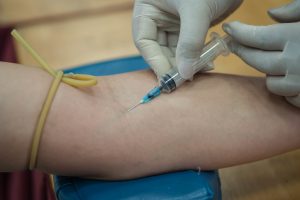 Brynn Campbell was involved in a head on-crash which killed the 83-year-old woman driving the other car. Campbell was taken to the hospital, and hospital staff performed a urine test. Although Campbell showed no obvious signs of impairment, a police officer went to the hospital and asked the nurse for the urine test results. The results showed Campbell’s alcohol level was well over the limit, according to the
 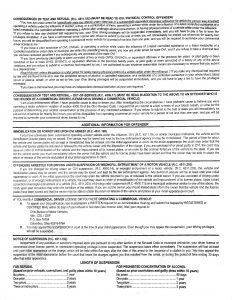 Anyone who has been charged with an OVI / DUI in Ohio has had the pleasure of listening to an officer read several paragraphs from the back of a form provided by the Ohio BMV. This often droll recitation is required by Ohio’s implied consent law, which says that anyone who operates a vehicle in the state implicitly consents to takes a blood/breath/urine test for drugs and/or alcohol if arrested for OVI. An implied consent law similar to Ohio’s was recently found to be unconstitutional by the Georgia Supreme Court.
 Just as Hollywood has produced some good movies in trilogies, the United States Supreme Court has produced some good case law in trilogies. The Court addressed the right to confront crime lab analysts with the trinity of Bullcoming, Melendez-Diaz and Williams. On the issue of the need for a warrant to draw blood from a DUI suspect, two-thirds of the triad have been completed: McNeely and Birchfield. The triumvirate is about to be consummated with Mitchell v. Wisconsin.