Columbus OVI/DUI Attorney Blog


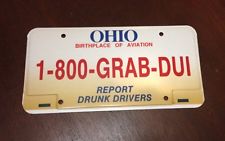 If another driver becomes angry with you, that driver can easily call the police and report you as a drunk driver. The driver doesn’t have to give a statement to the police. In fact, the allegation can be completely anonymous.
Should police officers be permitted to stop you based only on another person’s anonymous tip? That question will be answered by the Ohio Supreme Court, as it recently agreed to hear the case of State v. Tidwell. The case could have broad implications, not for not just OVI cases, but for individuals’ Fourth Amendment protections in general.
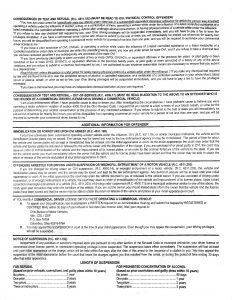 Anyone who has been charged with an OVI / DUI in Ohio has had the pleasure of listening to an officer read several paragraphs from the back of a form provided by the Ohio BMV. This often droll recitation is required by Ohio’s implied consent law, which says that anyone who operates a vehicle in the state implicitly consents to takes a blood/breath/urine test for drugs and/or alcohol if arrested for OVI. An implied consent law similar to Ohio’s was recently found to be unconstitutional by the Georgia Supreme Court.
 Fourth amendment law does not lend itself to mathematical formulas. Rather than using equations to decide Constitutional issues, courts look at the totality of the circumstances and make decisions on a case-by-case basis. This is particularly true when it comes to the issue of whether an officer had probable cause to justify an arrest. However, one theorem illustrated by a recent Ohio OVI case is this: clues on Field Sobriety Tests (FSTs) does not equal Probable Cause (PC).