 Columbus OVI/DUI Attorney Blog


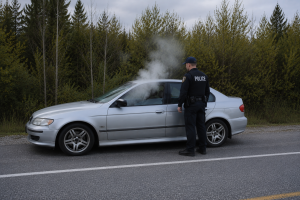 When a police officer stops a motorist, the officer may smell the odor of burned marijuana coming from inside the motorist’s vehicle. There was a time in Ohio when that odor alone would permit the officer to detain the driver and search the vehicle. That was before recreational marijuana was legalized. Now that recreational marijuana use is legal, the odor of burned marijuana, by itself, does not justify seizing the driver or searching the vehicle. This change has implications for DUI cases (called ‘OVI’ in Ohio) involving suspected marijuana intoxication.
Marijuana Odor Does not Justify Searching a Vehicle
The change is illustrated by the 2026 case of State v. Lewis. In that case, an officer stopped a vehicle for two minor traffic violations: failing to stop at a stop sign and failing to use a turn signal. The officer smelled burned marijuana coming from inside the vehicle, and the driver acknowledged smoking marijuana earlier. Based only the odor, the officer searched the vehicle and seized a loaded gun. The driver was convicted of weapons offenses.
The conviction was reversed by the Court of Appeals. The Court noted marijuana possession and consumption is not illegal, so the officer did not have probable cause to believe a crime had been committed or the vehicle contained evidence of a crime. Therefore, the ‘Automobile Exception’ to the search warrant requirement did not apply, and the search of the vehicle was unconstitutional.
Other Ohio appellate courts have reached the same conclusion since recreational marijuana was legalized in 2023. This conclusion is a departure from the Ohio Supreme Court’s 2000 decision in State v. Moore. In that case, the Court held an officer could perform a warrantless search of a vehicle based solely on the odor of marijuana emanating from the vehicle.
Marijuana Odor Does not Justify Detaining a Driver
The Court’s reasoning in Lewis applies to marijuana-based OVI cases. In many of these cases, the officer stops a motorist for a minor traffic offense and smells burned marijuana. The officer then detains the driver for field sobriety testing. Based on the holding of Lewis and other appellate cases, an officer is now not permitted to detain a driver for sobriety testing based solely on the odor of marijuana.
If the odor of marijuana does not justify a detention of the driver, what significance is given to the odor? The same significance given to the odor of alcohol. The odor is one factor in the totality of the circumstances to be considered by the officer (and analyzed by a reviewing court). To support the detention of the driver for sobriety testing, the totality of the circumstances must give the officer a reasonable suspicion the driver is under the influence.
Marijuana Odor is Not Evidence of Intoxication
The odor of marijuana should not be given much weight by a judge deciding legal issues or a jury determining guilt. The odor is evidence of (at most) consuming marijuana. It does not indicate marijuana intoxication. It is not illegal to drive after using marijuana. It is illegal to operate a vehicle under the influence of marijuana.
Although police officers often testify about the intensity of the odor, it has little significance. An officer cannot tell from the strength of the odor how much marijuana a person has consumed. If I eat pizza, can an officer tell from the strength of the pizza odor how much pizza I ate? Just as a strong odor of pizza is not evidence of gluttony, the strong odor of burned marijuana is not evidence of intoxication.